Mapping the genotype-to-phenotype map of a complex social syndrome.
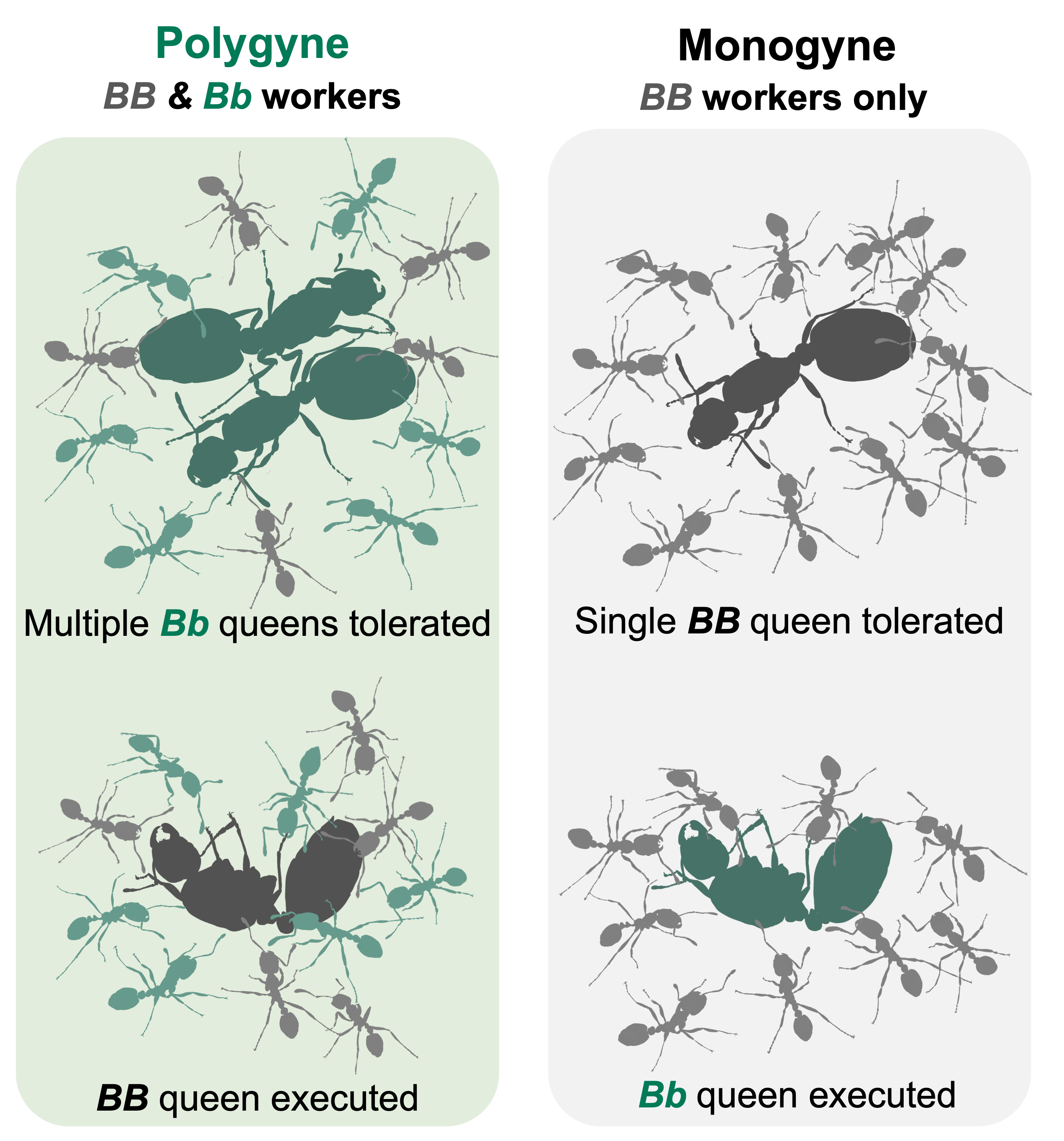
The social organization of S. invicta is controlled by the Sb supergene (hereafter as “b”). In monogyne (single-queen) colonies, queens and workers are all BB homozygotes, while polygyne (multiple-queen) colonies consist of Bb queens and a mix of BB and Bb workers. The b allele acts as a “greenbeard” element, driving Bb workers to preferentially eliminate non-greenbeard (BB) queens while accepting greenbeard (Bb) queens.
Summary of findings from my PhD work:
Key signals that mediate worker supergene discrimination
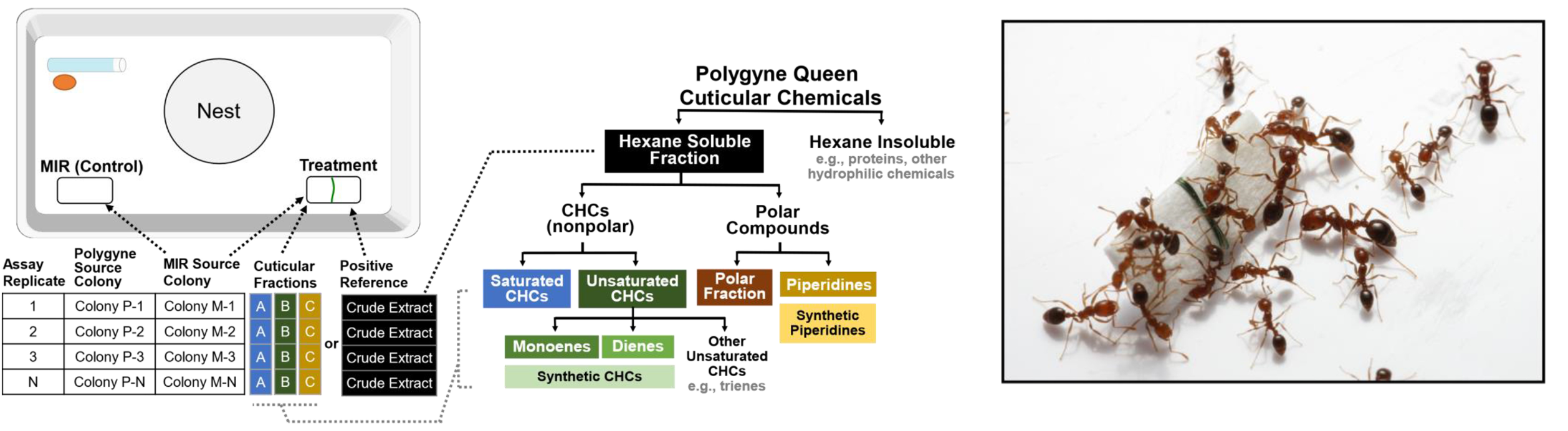
Polygyne workers distinguish queen supergene status based on their cuticular hydrocarbon components:
Zeng H, et al. (2022). Characterization of Queen Supergene Pheromone in the Red Imported Fire Ant Using Worker Discrimination Assays. Journal of Chemical Ecology, 48(2), 109-120.
Conversion of colony social form by Bb workers
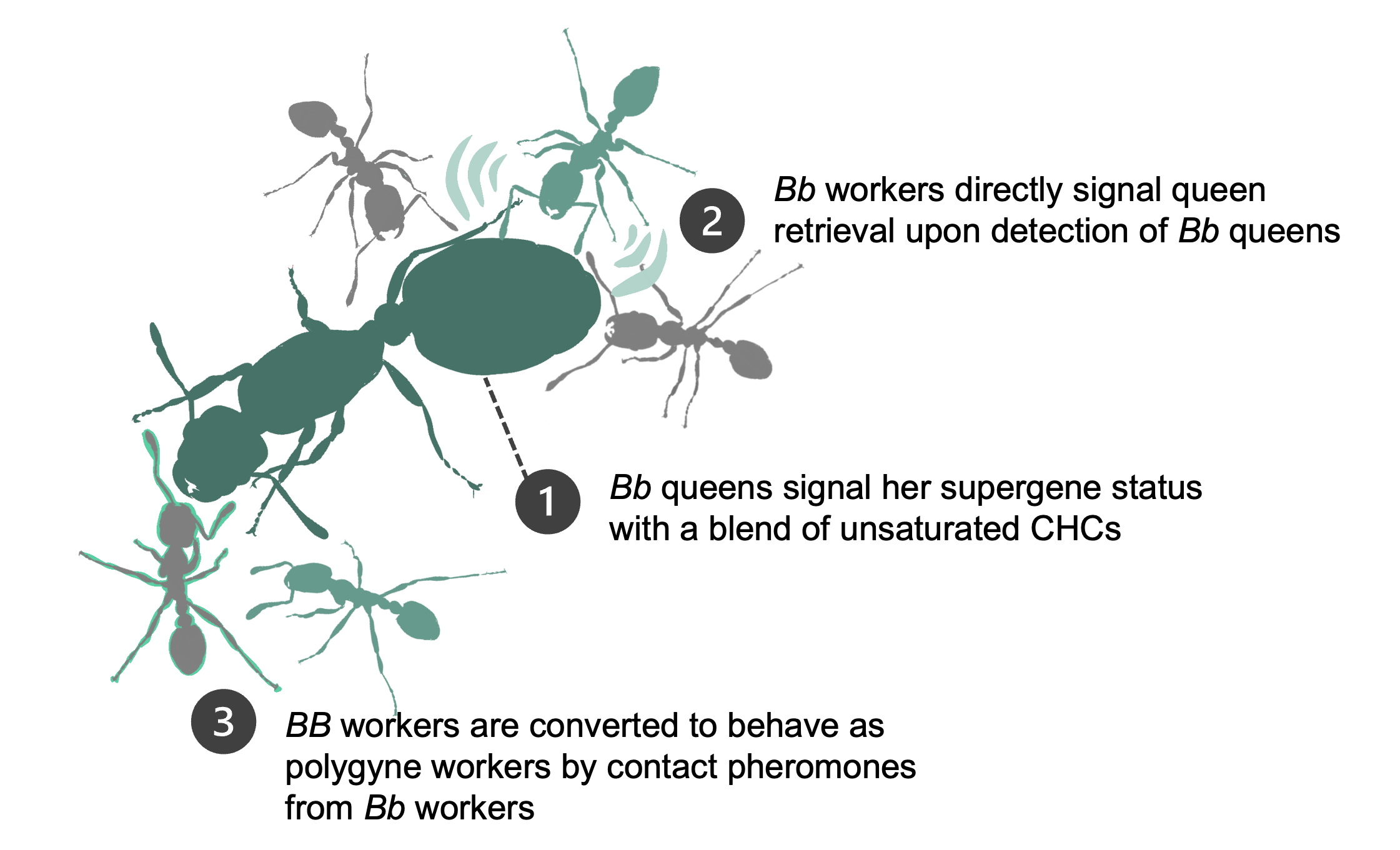
A minority of workers bearing the b supergene (Bb genotype) can trigger colony-level conversion from monogyne to polygyne behavior. But how?
Using 400-ant microcolonies, I found that Bb workers reduce BB worker aggression toward Bb queens, enabling polygyny at rates comparable to full-size (>20,000 ants) colonies. This social conversion depends on cuticular contact and involves nonvolatile pheromones. I also identified a second pheromone, released by polygyne workers upon detecting a Bb queen, that is necessary but not sufficient for the full transition.
Thus, multiple pheromonal components linked to presence of the Sb supergene allele in colony workers appear to be involved in shaping social environments and thereby inducing the transformation from monogyne to polygyne fire ant societies.
Zeng H, et al. (2025). Conversion of social organization in fire ant induced by few colony members: unmasking the indirect genetic effects. PNAS. 122(19), e2501740122.
Additional selfish natures of the Sb supergene
While extensive genomic studies have characterized the Sb supergene’s structure and evolutionary origins, its functional role in developmental and physiological regulation remains unclear. In particular, the b-carriers (Bb genotype) are overrepresented among sexuals and large workers, but it’s not known how this happens.
Sb supergene-mediated ontogenetic responses to juvenile hormone
This study investigates the interaction between the Sb supergene and juvenile hormone, a key regulator of insect growth and reproduction. Using Methoprene (a juvenile hormone analog), we examined genotype-specific responses across worker larval growth, gyne larval development, and adult dealation.
Zeng H, Eidson CE, Cushman DA, Nascimento M, Jones BM, Hunt BG. (2026). Developmental bias of body size and caste by the fire ant social supergene. Proceedings of the Royal Society B. 293(2080).

Overrepresentation of Sb among haploid males
The supergene b variant disproportionately propagates itself in male fire ants, strongly deviating from Mendelian inheritance patterns. This overrepresentation occurs by distortion of male haplotype frequencies during larval development, as we found that polygyne workers do not discriminate adult males by supergene genotypes.
Hettesheimer DR, Zeng H, Hunt BG, & Ross KG. (2025). Biased social chromosome transmission in males of the fire ant Solenopsis invicta. G3: Genes, Genomes, Genetics, 15(2), jkae289.
Organization of Ant Societies
Breeding systems of S. invicta
When animals reproduce in social groups, the potential for conflict and cooperation is shaped by the number of reproductive individuals (breeders), their relatedness to one another, and division of reproduction among them. These features comprise species’ “breeding systems.” Despite their importance, breeding systems are poorly characterized in most social animals, and detailed accounts for single species are rare. Here, we fully characterize the breeding systems in invasive populations of the fire ant Solenopsis invicta.
This report synthesizes previous research with new experiments featuring longitudinal data, large sample sizes, and detailed relatedness analyses to explore queen lifetime reproductive success, long-term dynamics in maternity and paternity skew, and the interactions between the supergene controlling colony queen number and other aspects of the breeding system.

Hale Walker S, Lacy KD, Ross K. Zeng H. (2024). A comprehensive account of the breeding systems of the model ant, Solenopsis invicta. Ecology and Evolution. ece3.71888.
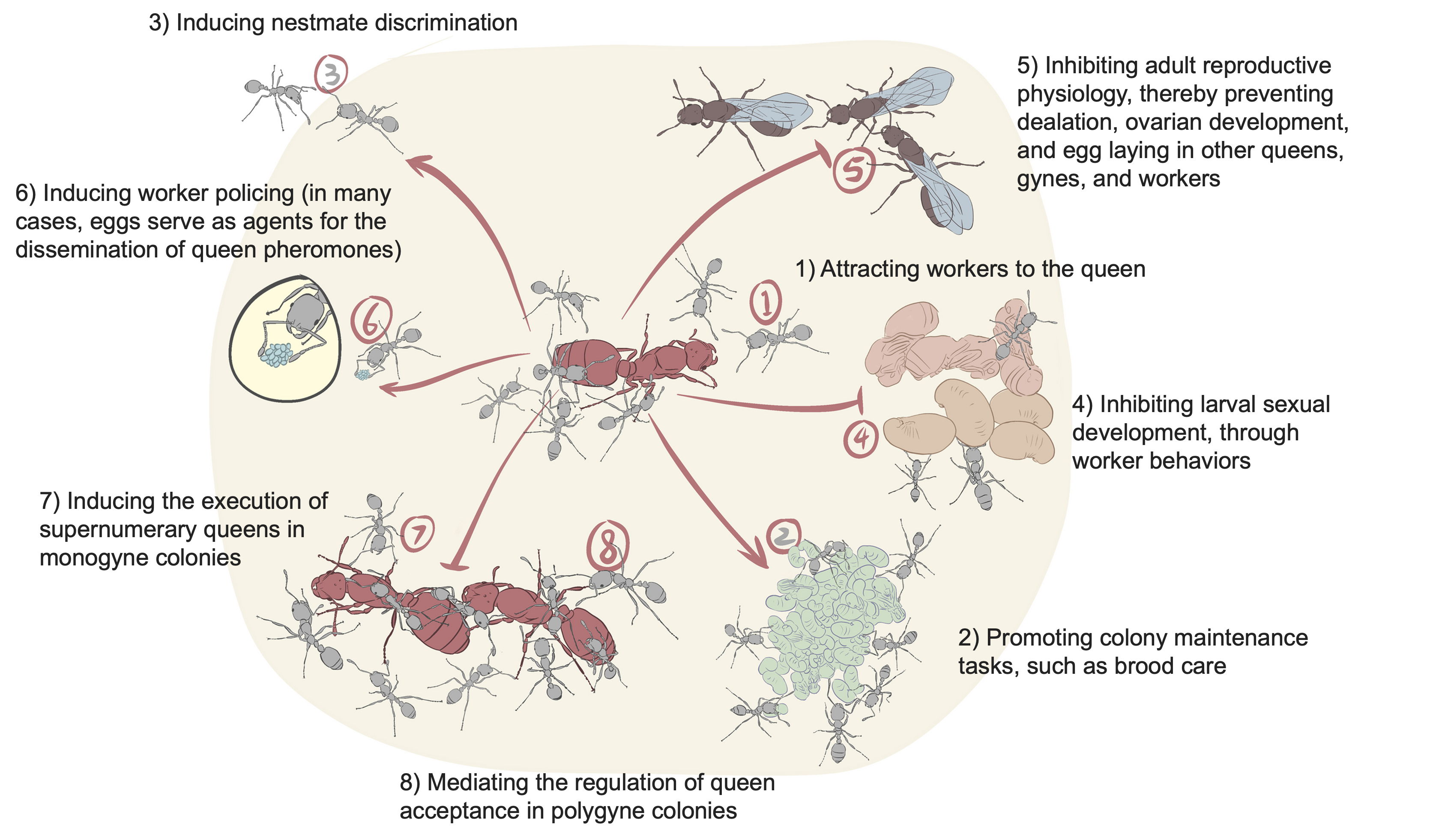
Functions of queen pheromones
In a review article, I summarize our current knowledge of queen pheromones from experimental studies that expressly demonstrate their functional properties in ant colonies.
Zeng H. (2023). Functional properties of ant queen pheromones as revealed by behavioral experiments. Behavioral Ecology and Sociobiology, 77(10), 113.