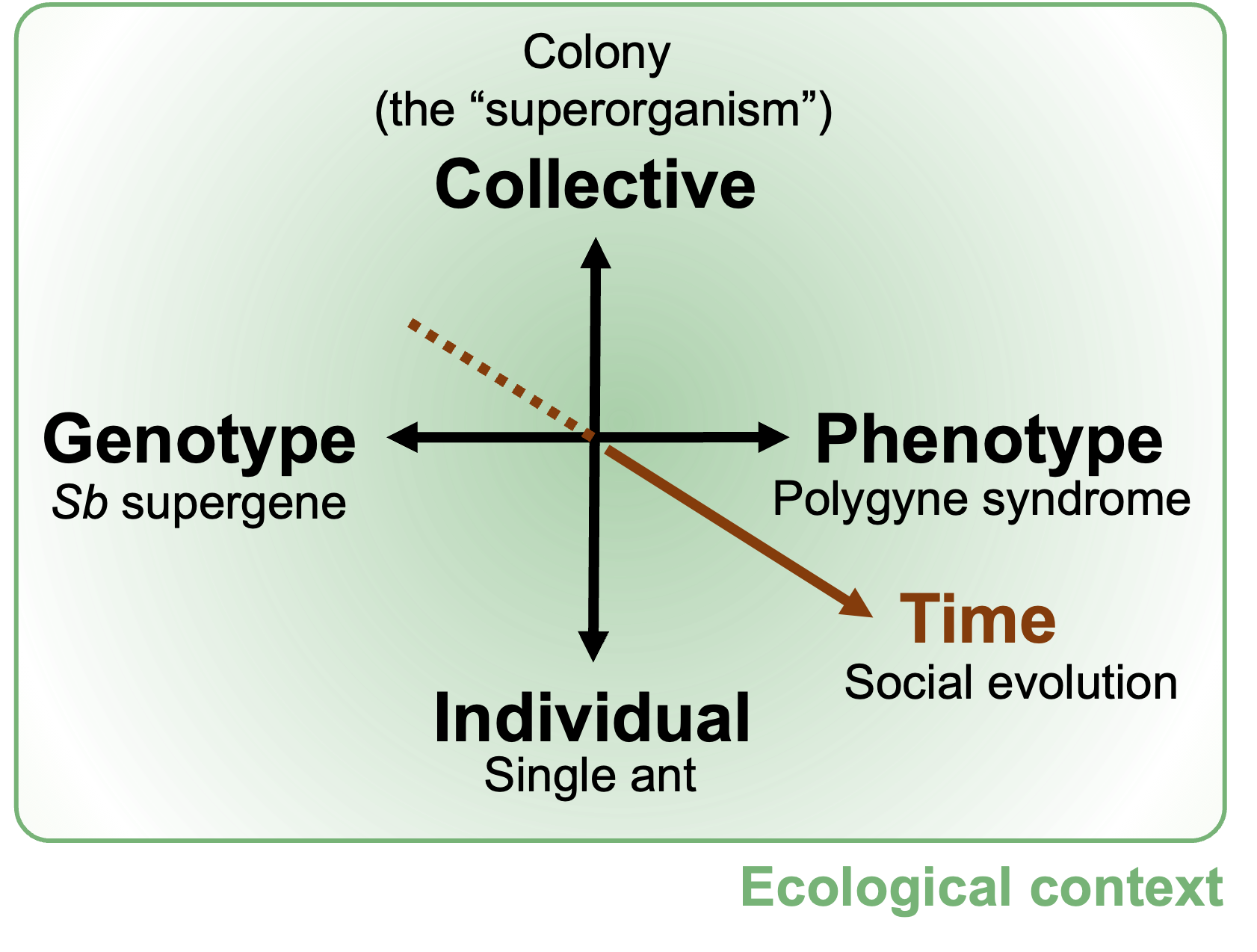
All biological systems are built from interacting subunits, and the development and behavior of the system emerge from the dynamic relationships among these subunits, as seen in self-organized embryonic development and neural dynamics underlying cognition. Yet, dissecting the mechanisms by which such collective properties emerge, adapt, and evolve, especially in animal social groups, remains a major challenge. I address this by disentangling the relationship between “higher-level” collective and “lower-level” individuals using eusocial insect colonies as a model. These colonies, functioning as superorganisms, are ideal for experimental manipulation and measurement of both individual and group-level traits. In particular, invasive ants serve as powerful examples due to their remarkable adaptability to diverse, human-disturbed habitats. My research will bridge between mechanistic and evolutionary perspectives of collective behavioral phenotype in insects by addressing two fundamental questions: (i) How do simple, local interactions give rise to flexible colony-level outcomes? and (ii) How do such collectives evolve under ecological and genetic constraints? This knowledge will also inform applied development for invasive species management and inspire algorithms of swarm intelligence and artificial intelligence agents.
@ UNIVERSITY OF GEORGIA (PhD & Postdoc)
During my Ph.D. (major advisor: Kenneth Ross) and postdoc training (advisors: Brendan Hunt & Takao Sasaki) at the University of Georgia, I focused on understanding the genotype-to-phenotype map of the polygyny (multiple-queen) syndrome in the fire ant Solenopsis invicta. My work has extended our understanding of how colony social organization in fire ants is regulated by an inversion-based social chromosome (the Sb supergene).
Mechanisms underlying variation of colony social organization
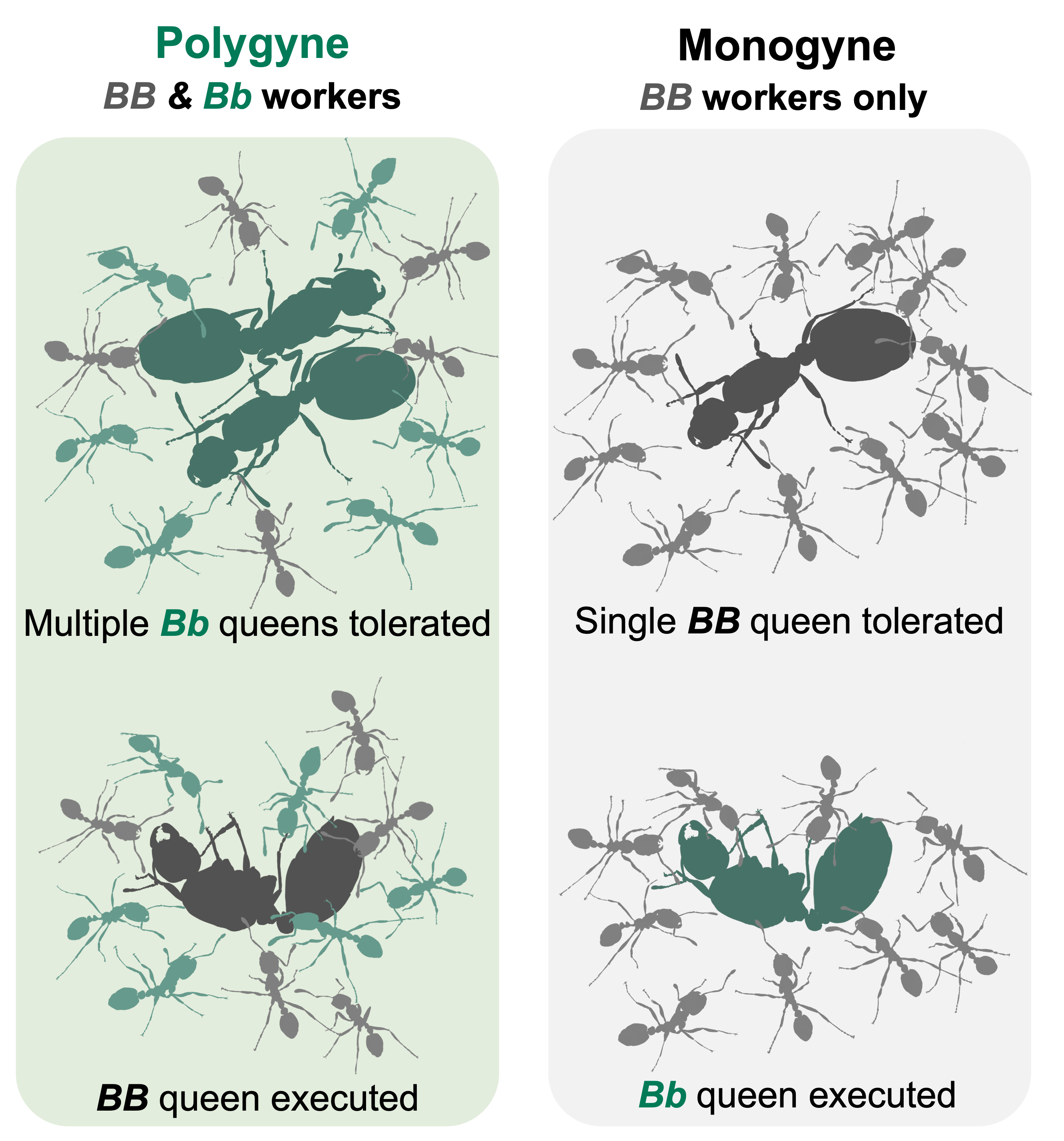
The social organization of S. invicta is controlled by the Sb supergene (hereafter as “b”). In monogyne (single-queen) colonies, queens and workers are all BB homozygotes, while polygyne (multiple-queen) colonies consist of Bb queens and a mix of BB and Bb workers. The b allele acts as a “greenbeard” element, driving Bb workers to preferentially eliminate non-greenbeard (BB) queens while accepting greenbeard (Bb) queens.
Summary of my findings from PhD works:
Key signals that mediate worker supergene discrimination
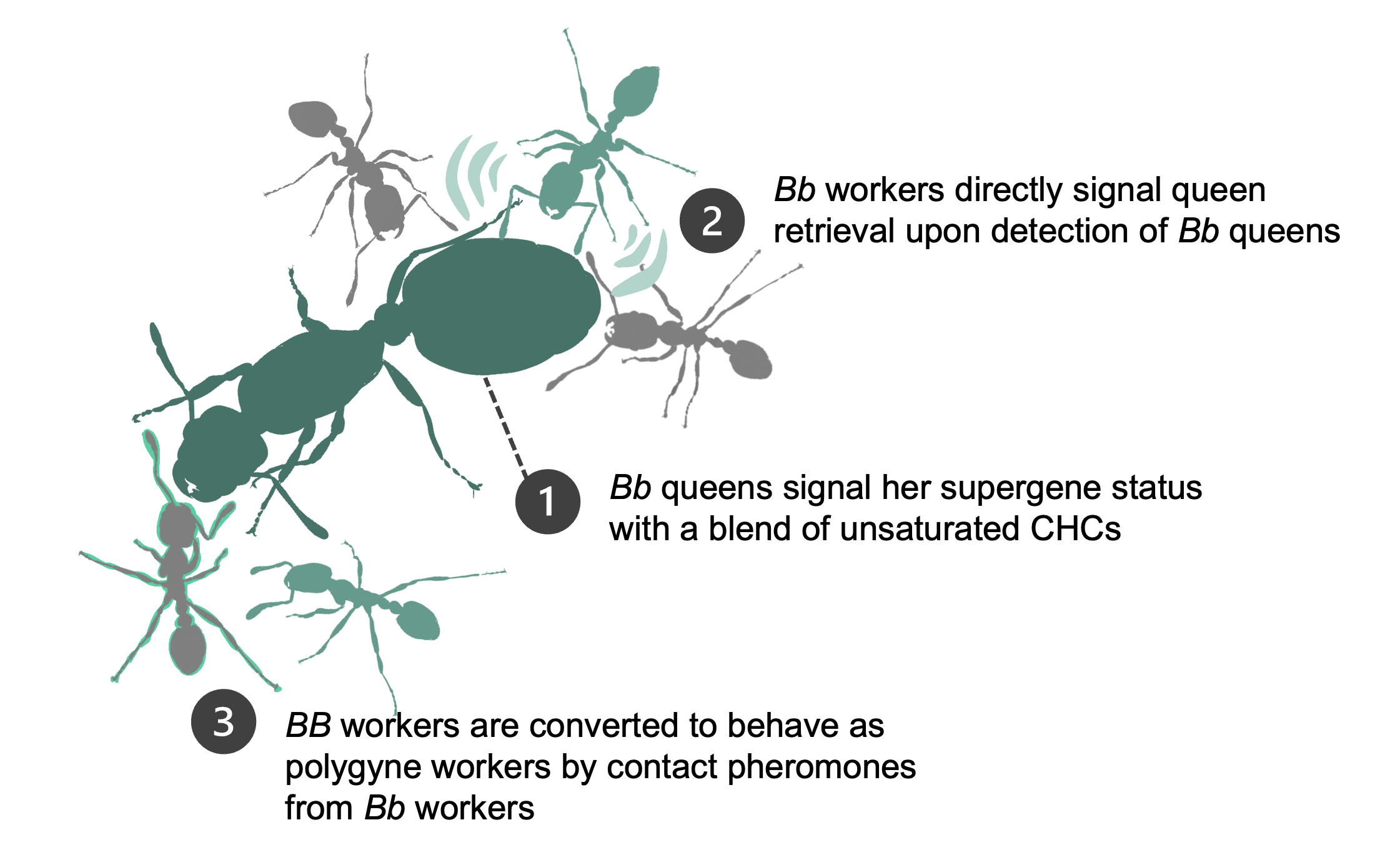
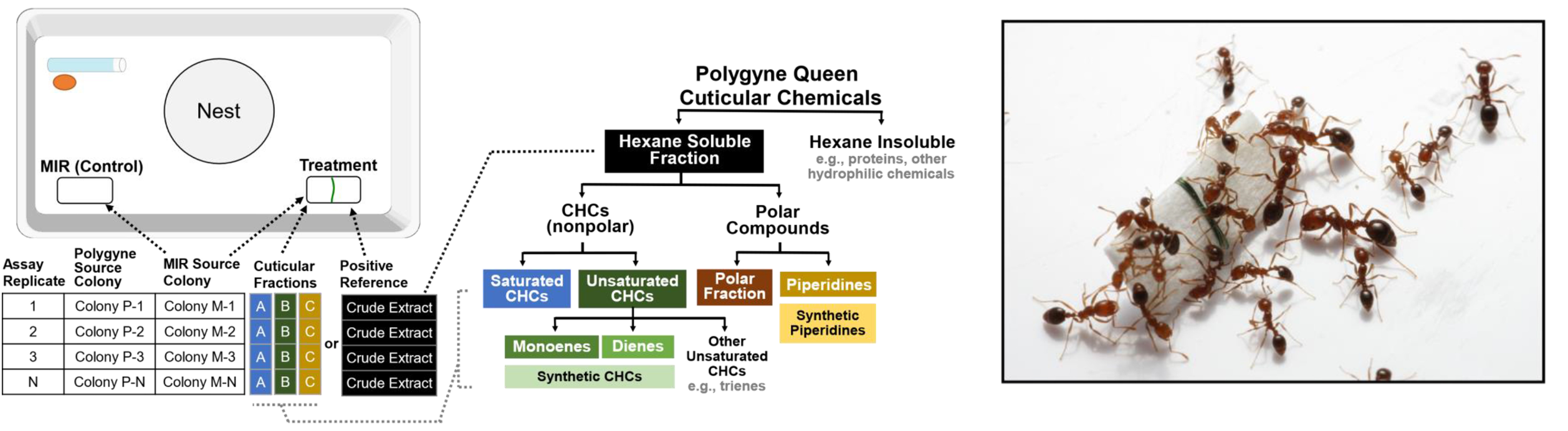
Polygyne workers distinguish queen supergene status based on their cuticular hydrocarbon components:
Zeng H, Millar JG, Chen L, Keller L, & Ross KG. (2022). Characterization of Queen Supergene Pheromone in the Red Imported Fire Ant Using Worker Discrimination Assays. Journal of Chemical Ecology, 48(2), 109-120.
Conversion of colony social form by Bb workers
A minority of workers bearing the b supergene (Bb genotype) can trigger colony-level conversion from monogyne to polygyne behavior. But how?
Using 400-ant microcolonies, I found that Bb workers reduce BB worker aggression toward Bb queens, enabling polygyny at rates comparable to full-size (>20,000 ants) colonies. This social conversion depends on cuticular contact and involves nonvolatile pheromones. I also identified a second pheromone, released by polygyne workers upon detecting a Bb queen, that is necessary but not sufficient for the full transition.
Thus, multiple pheromonal components linked to presence of the Sb supergene allele in colony workers appear to be involved in shaping social environments and thereby inducing the transformation from monogyne to polygyne fire ant societies.
Zeng H, Ross K, Sasaki T. (2025). Conversion of social organization in fire ant induced by few colony members: unmasking the indirect genetic effects. PNAS. 122(19), e2501740122.
Additional selfish natures of the Sb supergene
While extensive genomic studies have characterized the Sb supergene’s structure and evolutionary origins, its functional role in developmental and physiological regulation remains unclear. In particular, the b-carriers (Bb genotype) are overrepresented among sexuals and large workers, but it’s not known how this happens.
Sb supergene-mediated ontogenetic responses to juvenile hormone
This study investigates the interaction between the Sb supergene and juvenile hormone, a key regulator of insect growth and reproduction. Using Methoprene (a juvenile hormone analog), we examined genotype-specific responses across worker larval growth, gyne larval development, and adult dealation.
Paper in prep, for Genetics

Overrepresentation of Sb among haploid males
The supergene b variant disproportionately propagates itself in male fire ants, strongly deviating from Mendelian inheritance patterns. This overrepresentation occurs by distortion of male haplotype frequencies during larval development, as we found that polygyne workers do not discrinimate adult males by supergene genotypes.
Hettesheimer DR, Zeng H, Hunt BG, & Ross KG. (2025). Biased social chromosome transmission in males of the fire ant Solenopsis invicta. G3: Genes, Genomes, Genetics, 15(2), jkae289.
Organzation of Ant Societies
Breeding systems of S. invicta
When animals reproduce in social groups, the potential for conflict and cooperation is shaped by the number of reproductive individuals (breeders), their relatedness to one another, and division of reproduction among them. These features comprise species’ “breeding systems.” Despite their importance, breeding systems are poorly characterized in most social animals, and detailed accounts for single species are rare. Here, we fully characterize the breeding systems in invasive populations of the fire ant Solenopsis invicta.
This report synthesizes previous research with new experiments featuring longitudinal data, large sample sizes, and detailed relatedness analyses to explore queen lifetime reproductive success, long-term dynamics in maternity and paternity skew, and the interactions between the supergene controlling colony queen number and other aspects of the breeding system.

Hale Walker S, Lacy KD, Ross K. Zeng H. (2024). A comprehensive account of the breeding systems of the model ant, Solenopsis invicta. Ecology and Evolution. ece3.71888.
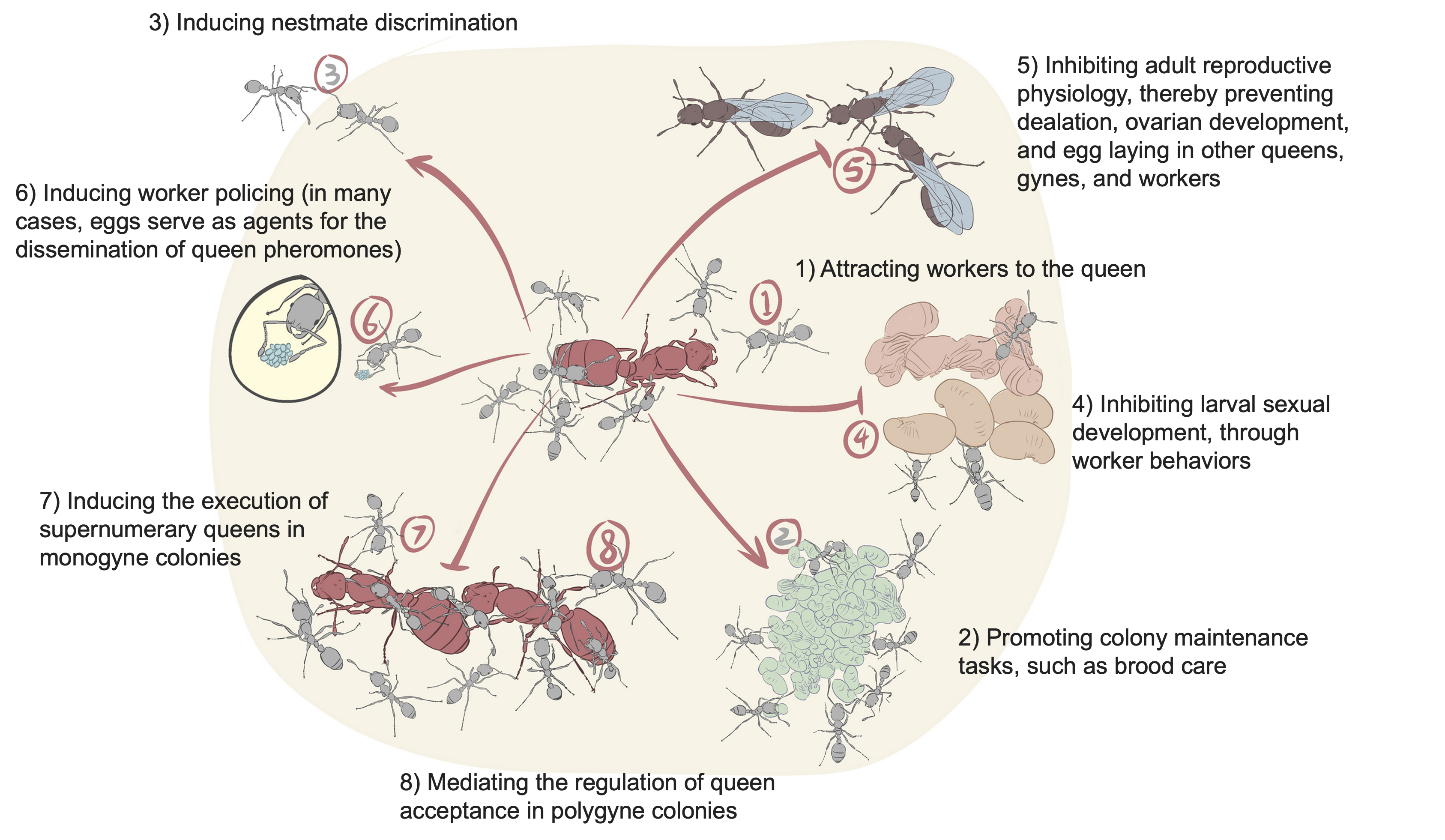
Functions of queen pheromones
In a review article, I summarize our current knowledge of queen pheromones from experimental studies that expressly demonstrate their functional properties in ant colonies.
Zeng H. (2023) Functional properties of ant queen pheromones as revealed by behavioral experiments. Behavioral Ecology and Sociobiology, 77(10), 113.
Emergence & Adaptive Dynamics of Collective Agency
Ant colonies exhibit a range of dynamic self-organized behaviors, such as nest building, migration, and the formation of living bridges or rafts. These behaviors represent extended phenotypes that result from the collective actions of individual ants. By studying the relationship between individual actions, emergent collective traits, and the ecological context, I aim to advance our understanding of the proximate mechanisms that enable the evolution of complex behaviors in ants and other social insects.
Self-assembly of pontoon bridging
In social insects, collective structures often arise in response to environmental challenges like gaps in a foraging path, prompting ants to form bridges. We demonstrate that fire ants can self-assemble functional structures even in a uniform environment. In laboratory experiments with 8000-ant subcolonies, ants detected food in the center of a water-filled dish and formed a floating pontoon bridge of about 500 ants to reach it. Despite multiple initial proto-bridges, only one fully formed as others dissipated, with no environmental heterogeneity guiding bridge placement. Our agent-based model suggests this behavior emerges from individual ants responding to local cues, such as food scent. In heterogeneous environments, where the distance to food varies, ants formed multiple bridges, confirming the model’s predictions. This study reveals how ants can coordinate complex self-assemblages using only local information, without relying on environmental asymmetry.
Manuscript in prep for PNAS, in collaboration with Dr. Dan Goldman’s group in Georgia Tech.

Collective learning in pavement construction
Manuscript in revision
As early as 1911, Wheeler documented in his classic monograph that many ant species deposit debris onto noxious substrates on their foraging paths to facilitate movement, yet it remains unclear whether ants can adaptively and collectively refine such tool-use behavior as a group. To test this, we designed an assay in which workers of Solenopsis invicta, a globally widespread ant with robust paving response, were required to cross a viscous barrier to reach a food source, prompting them to cover the barrier using nearby substrate. We presented test colonies with a freshly assembled circular “paving arena” for up to five 24-hour trials, each separated by a one-week interval.

To our best knowledge, our study is the first to demonstrate collective learning in social insect colonies through a strategic trade-off between task completion time and functional efficiency: gradually paving straighter, narrower routes with less material. Further, we found that such learning resulted from interaction with the material (glitter) but not the actual paving task experience.
@ University of ILLINOIS (undergraduate)
Sep 2015 – April 2016 With Dr. Katy Heath, University of Illinois, Searching for selection for higher wind dispersal ability in western redcedar in the Pacific Northwest.
Sep 2014 – Jan 2015 With Dr. Dietrich, University of Illinois, The relationships between Auchenorrhyncha insect diversity and vegetation community composition in Illinois
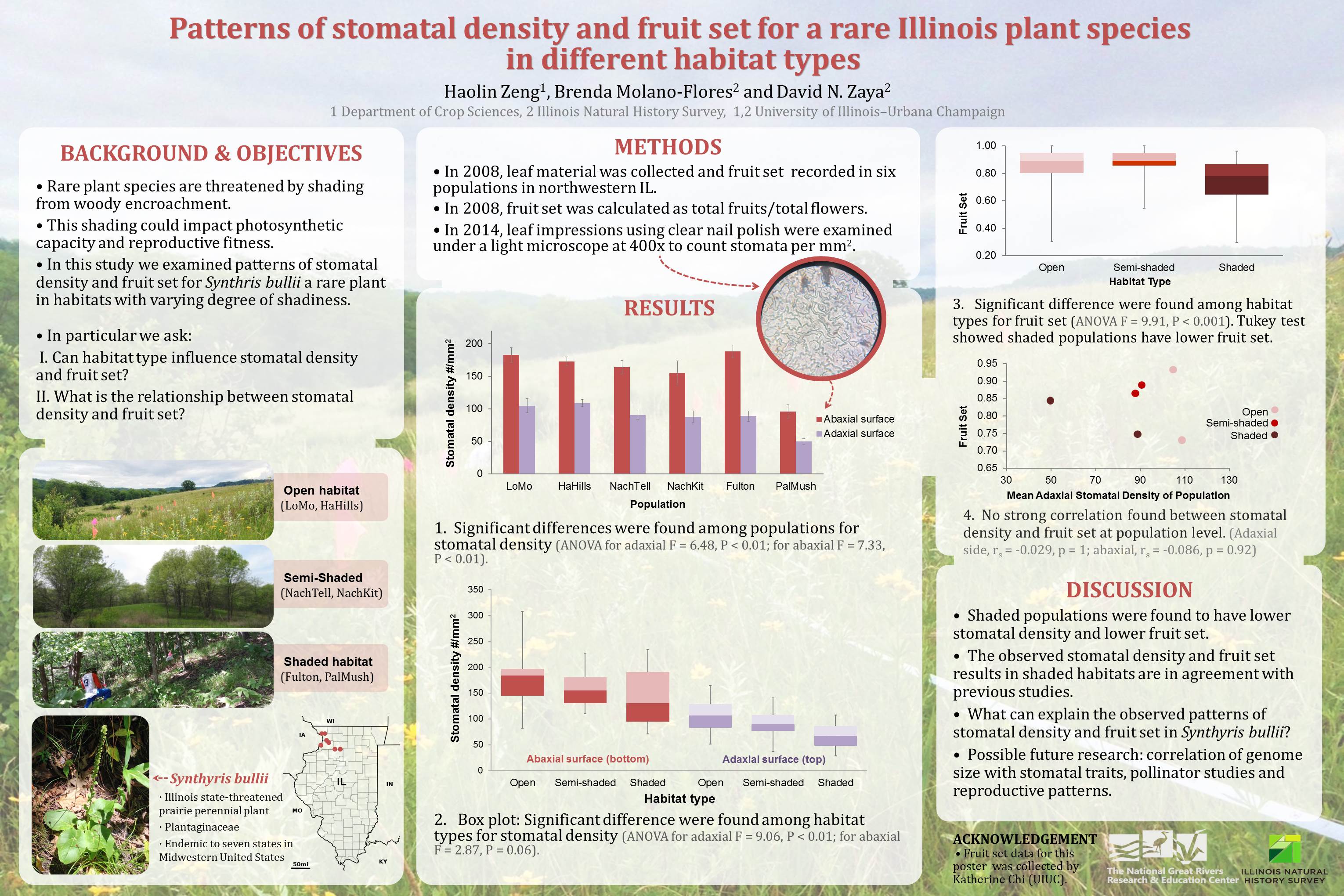
Summer research 2014: with Dr. Molano-Flores & Dr. David Zaya, The relationship between reproduction, photosynthetic traits, and genome size for a rare Illinois plant species along the Mississippi River”
 Horace Zeng
Leave a comment